


LED Police Light Bar Buying Guide: What Every Department Needs to Know
Buying a police light bar sounds simple until you're actually doing it.
You open a browser, search for options, and suddenly you're looking at forty different products with conflicting spec sheets, no clear explanation of what the numbers actually mean, and zero guidance on what your department's specific vehicles actually need.
This guide exists to fix that. Whether you're a patrol sergeant outfitting one vehicle or a fleet manager sourcing lights for thirty cruisers, the decisions you make here directly affect officer visibility, public safety, and your department's compliance with SAE and state lighting standards.
Here's everything you need to know before you order a single unit.
Why the Light Bar You Choose Actually Matters
A police light bar isn't just a flashing light on a roof. It's the first thing oncoming traffic sees before it reacts. It's what tells a driver at an intersection whether to stop or go. It's what makes a stopped officer visible from 500 feet back on a dark highway shoulder at 11pm.
The difference between a Class 1 certified LED light bar and a cheap uncertified unit isn't subtle — it's measurable in candela output, flash rate, and visible distance. Departments that cut corners on lighting equipment have paid for it in near-miss incidents and officer safety complaints.
The good news: you don't need an unlimited budget to get professional-grade equipment. You need to understand what you're buying and match the product to the application.
The Society of Automotive Engineers (SAE) publishes the J595, J845, and J1318 performance standards that define what a Class 1, Class 2, or Class 3 warning light actually has to deliver. When you see "SAE Class 1 certified" on a product, that's not marketing language — it's a measurable performance threshold your light cleared during testing.
All warning light specs, authorizations, and state compliance questions tie back to those SAE standards. If a product doesn't list its SAE class, that's a red flag worth taking seriously.
The Four Main Types of Police Light Bars
Understanding the form factors first saves you from ordering the wrong product for your vehicles.
Full-Size Light Bars
Full-size bars run 36 to 55 inches across the roof and deliver maximum 360-degree visibility. They're the most recognized form factor — what most people picture when they think "police light bar." Built-in takedown lights, alley lights, and rear-facing warning modules make them the most capable option for primary patrol vehicles.
Best for: patrol cars, sheriff vehicles, highway units, any primary response vehicle where maximum visibility is the priority. The Abrams MFG full-size light bar collection covers this category with SAE Class 1 certified options in multiple color configurations.
Mini Light Bars
Mini bars run 10 to 24 inches and mount to the roof or dash. They sacrifice some raw output for a lower profile — popular on secondary units, unmarked vehicles used in traffic enforcement, and municipal vehicles that need warning capability without a full patrol bar setup.
Best for: detective vehicles, secondary patrol units, parking enforcement, and fleet vehicles that operate in non-primary response roles. Browse the mini light bar options at Abrams MFG for single and dual-color configurations.
Visor Light Bars
Visor bars mount inside the vehicle behind the windshield, attached to the sun visor. They're completely invisible from outside when inactive — flipping them on produces a powerful forward-facing warning pattern that's surprisingly effective at clearing traffic.
Best for: unmarked law enforcement vehicles, detective units, surveillance operations, and any application where a visible roof mount would compromise the vehicle's covert status. The Abrams MFG LED visor light bars are built specifically for this use case.
Interior Dash and Deck Lights
Dash lights and deck lights mount inside the vehicle at dashboard level or rear deck position. They supplement roof and visor bars for additional forward or rear-facing visibility, and they're a common addition on vehicles that need more visual coverage without adding external hardware.
Best for: adding forward or rear warning to any vehicle already running other lights, secondary vehicles, and municipal units where a full light bar isn't practical.
Key Specs That Actually Matter
Product pages throw a lot of numbers at you. Here are the ones that determine whether a light bar is worth ordering:
SAE Class Rating Class 1 is the standard for primary law enforcement use. It defines minimum light output, flash rate, and visibility distance. Class 2 is for secondary vehicles. Don't accept anything below Class 1 for primary patrol.
Flash Patterns More is better here — not because you'll use all of them, but because different operational scenarios call for different patterns. Traffic stops, highway pursuits, and intersection clearance each benefit from specific flash cadences. Look for a minimum of 15–20 selectable patterns. Abrams MFG bars offer 30 to 65+ patterns depending on the model.
Lumens and Candela Output Lumens measure total light output. Candela measures directional intensity. For law enforcement use, candela matters more — you want intensity in specific directions, not just raw output. SAE Class 1 sets minimum candela thresholds per direction.
IP Rating Roof-mounted lights face everything weather throws at them — rain, sleet, road spray, pressure washing during vehicle cleaning. IP67 means fully dust-tight and submersible to 1 meter for 30 minutes. That's your minimum for any external mounting. The IEC standard for IP ratings defines exactly what each number means.
Sync Capability On multi-unit setups — visor bar plus grill lights plus rear deck — synchronized flash creates a coordinated warning pattern that looks professional and performs better than independent units running out of phase. Look for sync capability that works across the full lighting system, not just within a single bar.
Color Options and State Requirements
For law enforcement vehicles, red and blue is the standard combination across the U.S. Most states permit red/blue for sworn law enforcement operating in an official capacity.
Common color configurations for police applications:
-
Red/Blue — standard patrol, most states
-
Red/Blue/White — adds forward-facing white takedown and alley lights
-
Red/Blue/Amber — useful in states where amber rear-facing warning is required for traffic management
White takedown lights and alley lights are built into most full-size bars and serve a functional role on traffic stops — the forward-facing white floods the area in front of the vehicle for officer safety.
Before ordering any specific color configuration, verify your state's current authorization. Our emergency vehicle lighting laws by state guide covers the full state-by-state breakdown, and our article on what color emergency lights are legal in each state goes deeper on color-specific rules.
The NHTSA publishes federal vehicle lighting standards, and the National Fire Protection Association's NFPA 1901 standard is worth reviewing if your department also outfits fire apparatus.
Permanent vs Magnetic Mount for Police Applications
For primary law enforcement vehicles, permanent mount is almost always the right answer. Police cars operate at highway speeds regularly, and magnetic mounts aren't designed for sustained high-speed use — wind load and vibration at 100+ mph creates real risk of displacement.
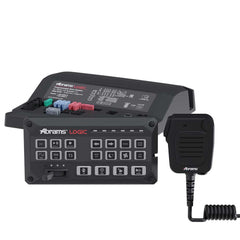
Permanent mount also allows full hardwired integration with the vehicle's siren controller, light controller, and power distribution — which is how a professional upfit should look.
Magnetic mounts have a specific role in law enforcement — they're useful for temporary enforcement vehicles, undercover cars that occasionally need visible warning capability, and situations where a permanent installation isn't practical.
If you're ordering for an entire fleet and need permanent upfit guidance, the Abrams MFG fleet solutions page covers bulk ordering and compliance documentation for departments and municipalities.
Pairing Your Light Bar with the Right Supporting Equipment
A light bar alone doesn't complete a patrol vehicle setup. Most departments pair the primary bar with supporting equipment that covers the full vehicle perimeter:
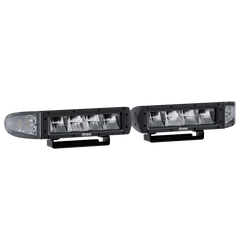
Grill lights — forward-facing warning heads mounted in or near the grille, adding front visibility and a more commanding approach pattern. The LED grill lights collection at Abrams MFG includes surface-mount and grille-specific options that sync with roof bars.
Hideaway strobes — concealed warning lights that install inside existing headlight and taillight housings. When activated, they flash through the existing lens. Completely invisible when off, fully effective when on. Browse the hideaway strobe lights for low-profile supplemental warning.
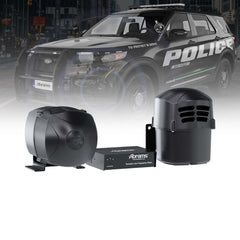
Siren and speaker systems — warning lights without a siren are incomplete for primary law enforcement use. The siren kits collection at Abrams MFG pairs with the light bar lineup for a complete vehicle package.
Beacon lights — useful on command vehicles, secondary units, and vehicles that need roof warning without a full bar installation. The LED beacon light collection covers single-unit options in multiple color configurations.
How to Order for a Fleet or Department
Ordering one light bar is straightforward. Ordering for an entire fleet involves a few additional steps that save significant time and budget:
Step 1 — Define your vehicle types. Not every vehicle in a fleet needs the same configuration. Primary patrol cars, detective vehicles, supervisory units, and support vehicles each have different requirements.
Step 2 — Standardize your spec. Pick one or two configurations across your fleet where possible. Standardization simplifies training, maintenance, and future replacement orders.
Step 3 — Verify state compliance. Confirm color authorization and mounting requirements for your state before finalizing specs. State law governs what you can legally run.
Step 4 — Request a fleet quote. Abrams MFG works directly with law enforcement agencies, municipalities, and government fleets. The OEM and government solutions program includes compliance documentation support, custom configuration options, and GSA-aligned purchasing.
Step 5 — Plan your install. Coordinate with your upfitter or in-house maintenance team. Full-size bars with siren integration require approximately 2–4 hours per vehicle for a professional installation.
Frequently Asked Questions
What light bar size works best for a Ford Police Interceptor Utility?
Most departments use a 47–52 inch full-size bar on the Interceptor Utility. The wider roof gives you room for a full-length bar with integrated takedowns and alley lights. Check your specific vehicle's roof dimensions against the bar specs before ordering.
How many flash patterns do we actually need?
Practically, departments use 3–5 patterns regularly. But having 30+ available means you can adjust for specific operational needs — intersection clearance, traffic stop, pursuit, and scene management all benefit from different patterns.
Can we get custom color configurations for specific units?
Yes. Abrams MFG supports custom configurations for fleet orders. Contact the team directly to discuss department-specific requirements.
What warranty covers law enforcement light bars from Abrams MFG?
Abrams MFG backs its products with a manufacturer warranty covering defects in materials and workmanship. Warranty terms are available at purchase and the Abrams factory repair center handles service if issues arise.
Do Abrams light bars sync with aftermarket siren controllers?
Abrams MFG lights are designed to work within the Abrams ecosystem for best sync performance. For integration with specific third-party controllers, contact the support team to confirm compatibility before ordering for a full fleet.
Equip Your Fleet with Lights Built for the Job
Law enforcement doesn't get second chances on equipment reliability. The light bar you mount today needs to perform on the first activation, the thousandth activation, and every one in between — in rain, cold, heat, and everything a patrol shift throws at it.
Abrams MFG has supplied departments, municipalities, and government fleets for over 15 years. Every product in the law enforcement lineup carries SAE Class 1 certification and a warranty backed by a factory repair center.
